
Urgent Care vs ER vs Your Doctor: A Chambers County Decision Guide (Heat, Cuts, Sprains)
By Chambers Health | Medically reviewed by Dr. Anthony Capili, Board-certified Physician, Chambers Health
The urgent care vs ER decision starts with one question: could this problem kill someone or cause permanent disability? If yes, call 911, or go to the closest emergency room when the person is stable and transport is safe. If no, but it cannot wait for a regular appointment, an urgent care clinic can handle it where one is available. Problems that can wait for an appointment belong with your doctor.
If someone has trouble breathing, severe bleeding, chest pain, stroke signs, confusion, or possible heat stroke right now: call 911. Do not spend time choosing a clinic.
That first question comes from MedlinePlus guidance from the National Library of Medicine on when to use the emergency room, and it does most of the work. The second question is local: which settings exist near you, and what does each one offer? This guide from Chambers Health, and the Right Door Check at its center, runs on that two-step decision: danger determines the emergency call first, and the care actually available nearby determines the rest. It connects published clinical guidance to the Chambers County services verified on Chambers Health’s own pages, so residents can tell an emergency from a problem that may be appropriate for urgent care where available, primary care, or home care.
The short version:
Care setting | Generally appropriate for | Availability |
Emergency room | Potentially life-threatening or disabling symptoms and serious injuries | Open 24/7 |
Urgent care | Non-life-threatening illness or injury that should not wait for a routine appointment | Hours, testing, and services vary by clinic |
Primary care | Routine illness, stable symptoms, follow-up, prevention, and ongoing care | Appointments and same-day access where offered |
What’s the Difference Between Urgent Care, the ER, and Your Doctor?
Three settings, three jobs. The emergency room handles problems that threaten life or limb, around the clock. An urgent care clinic handles problems that are not dangerous but cannot wait for an appointment. Primary care covers routine illness, follow-up, prevention, and ongoing care.
An emergency room is a hospital department for potentially life-threatening or disabling symptoms and serious injuries, open 24/7.
An urgent care clinic treats problems that are not life-threatening and do not risk disability, when you cannot see your own provider soon enough, per MedlinePlus guidance. Availability, hours, and services differ from community to community and clinic to clinic. Confirm before you drive.
Your doctor (a primary care provider) covers routine illness, follow-up care, medication questions, and prevention. Many primary care practices also offer same-day sick visits.
When Should You Call 911 or Go to the ER?
It is an emergency when a person could die or be permanently disabled, per MedlinePlus guidance. Call 911 when symptoms are life-threatening, the person is unstable, bleeding is severe, stroke or heat stroke is suspected, or safe transportation is uncertain. When the person is stable and transport is safe, go to the closest emergency room.
Per MedlinePlus emergency guidance and the safety guidance cited later in this article, treat these as emergencies:
- Trouble breathing or choking
- Chest pain
- Severe bleeding
- Sudden stroke signs (Chambers Health’s BE FAST stroke guide covers these)
- Confusion, fainting, or loss of consciousness
- Possible heat stroke: confusion, slurred speech, or passing out during hot conditions
911 and the ER are not interchangeable. Calling 911 brings emergency care to you: the right call when the person is unstable, bleeding heavily, showing stroke or heat stroke signs, or when no one can transport them safely. When the person is stable, awake, and someone can drive safely, going straight to the closest emergency room is appropriate, and not every injury needs an ambulance: a possible broken ankle can ride by car, while someone confused or fading should not be driven by family. When in doubt about an emergency, call 911.
When Is Urgent Care the Right Choice?
Urgent care fits the middle: your problem is not dangerous, but you are concerned and cannot see your provider soon enough. That is the MedlinePlus standard, and it settles most of the urgent care vs ER confusion on its own.
Typical urgent care territory, per MedlinePlus: colds and flu, earaches, sore throats, migraines, low-grade fevers, limited rashes, sprains, back pain, minor cuts and burns, minor broken bones, and minor eye injuries.
Two practical rules make this work in real life. First, confirm before you go: hours, services, insurance participation, and wait times vary by clinic, and the clinic you remember may have changed since your last visit. Second, when you are unsure what to do and none of the emergency signs above are present, MedlinePlus guidance says to call your provider first.
For problems that are not emergencies, cost points the same direction: the same MedlinePlus guidance notes that care in an emergency department can cost two to three times more than the same care in your provider’s office.
When Should You See Your Doctor Instead of Urgent Care?
Primary care may be the right setting for routine illness, stable symptoms, medication questions, follow-up care, and prevention. A regular provider also knows your history, which supports better decisions over time. For problems that need attention today but are not emergencies, many practices, including Chambers Health’s clinics, note same-day availability.
In Chambers County, Chambers Health operates primary care clinics in Anahuac, Mont Belvieu, and Dayton, and its primary care page notes same-day appointments. Locations and hours appear in the local options section below.
Heat, Cuts, and Sprains: Urgent Care or ER?
Summer in Chambers County produces the same three decisions over and over. Each block below uses published clinical guidance, cited on the claim, and none of it replaces a clinician’s judgment. The Right Door Check table at the end of this section condenses all three into one shareable reference.
Heat illness
Confusion, slurred speech, or unconsciousness during hot conditions are signs of heat stroke per OSHA first-aid guidance: call 911 and cool the person with ice or cold water until help arrives. In Chambers County, the 24/7 emergency room at Bayside Community Hospital in Anahuac lists heat stroke among the conditions it treats. For heat exhaustion signs (heavy sweating, weakness, dizziness, nausea, headache), CDC and NIOSH guidance says move the person somewhere cool, give water, and get medical evaluation; National Weather Service first-aid guidance adds to seek immediate medical attention if the person vomits, symptoms worsen, or symptoms last longer than an hour.
Cuts
Call 911 if bleeding is severe, per MedlinePlus wound guidance. The Bayside ER’s published conditions also include lacerations. The same MedlinePlus guidance says to contact a provider promptly when a wound is more than a quarter inch deep, on the face, or reaching bone (stitches may be needed); when the cut came from an animal or human bite, a rusty object, or a puncture; when something is stuck in the wound (do not pull it out); or when infection signs appear: warmth, redness, throbbing, fever, swelling, a red streak, or pus. Minor cuts can be treated at home with washing, direct pressure to stop the bleeding, antibacterial ointment, and a clean bandage, per the same MedlinePlus guidance.
Sprains
Most sprains are routine: pain, swelling, and bruising around a joint that still looks normal. MedlinePlus sprain guidance points those to home care first (rest, ice wrapped in cloth, a firm but not tight wrap, and keeping the joint raised), with most mild sprains healing in seven to ten days.
Get emergency care when the red flags in MedlinePlus guidance appear: you think a bone is broken, the joint looks out of position, the injury or pain is severe, or you heard a pop and immediately could not use the joint. If the person is stable and transport is safe, the closest ER can evaluate it; call 911 when that is not the case. That same Bayside conditions list includes sprains. Contact your provider if swelling does not start to improve within two days, or, per MedlinePlus ankle-sprain aftercare guidance, if walking stays very painful, the joint keeps giving way, or the area becomes numb, tingly, or cold.
The Right Door Check
Situation | Right door | Source |
Confusion, slurred speech, or collapse in the heat | Call 911; cool the person while you wait | |
Heat exhaustion signs that worsen, involve vomiting, or last over an hour | Immediate medical attention | |
Severe bleeding | Call 911 | |
Cut deeper than a quarter inch, on the face, or reaching bone; bites; punctures; embedded objects | Prompt medical care; stitches may be needed | |
Suspected broken bone, joint out of position, or a pop with immediate loss of use | Closest ER; call 911 if the person is unstable or transport is unsafe | |
Sprain swelling not improving after two days, very painful walking, or numbness | Contact your provider | |
Cold, flu, earache, low-grade fever, limited rash | Urgent care where available, or a same-day provider visit | |
Minor cut or mild sprain responding to home care | Home first aid; watch for infection signs | MedlinePlus wound and sprain guidance |
When a row does not fit your situation, call your provider, or 911 for anything that could be an emergency.
Where to Get Care in Chambers County
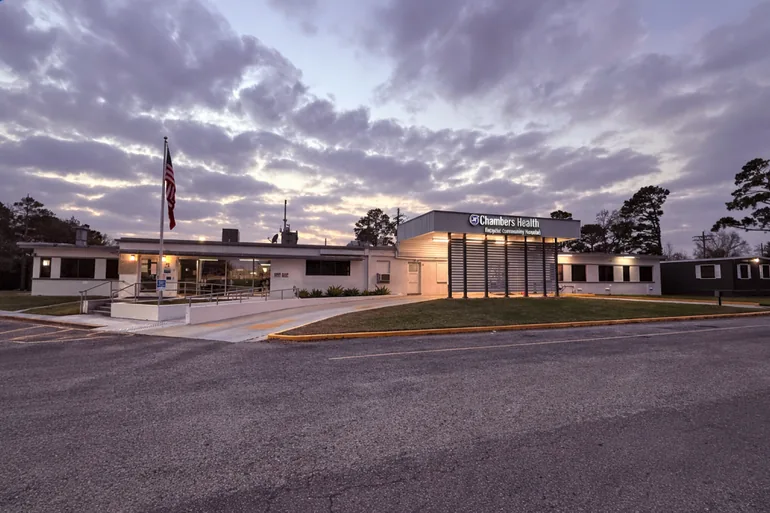
For emergencies, call 911 or go to the closest emergency room. Chambers Health’s emergency room at Bayside Community Hospital in Anahuac is open 24 hours a day, 7 days a week, and its page lists heat stroke, lacerations, and sprains among the conditions it treats.
For care that can wait for an appointment, or needs one today, Chambers Health’s primary care clinics in Anahuac, Mont Belvieu, and Dayton note same-day appointments, and appointments can be booked at (281) 576-0670. In Mont Belvieu, West Chambers Medical Center is open 7 a.m. to 8 p.m. weekdays and 7 a.m. to 3 p.m. Saturdays. For general information, Chambers Health’s main line in Anahuac is (409) 267-3143.
Urgent care remains a general care category in this guide because availability differs by community. Before using any urgent care clinic, confirm its current hours, services, and insurance participation. The options above are the ones verified on Chambers Health’s own pages as of July 2026.
Urgent Care vs ER: Common Questions
What can an urgent care clinic treat?
Problems that are not life-threatening when you cannot see your provider soon enough. MedlinePlus guidance lists common mild illnesses and minor injuries, from colds, earaches, and low-grade fevers to sprains, minor cuts and burns, and minor broken bones. Services vary by clinic, so confirm before you go.
Should I go to the ER for a sprain?
Not for a routine one. Most sprains respond to home care, with a provider visit if swelling is not improving within two days. Get emergency care for the red flags in MedlinePlus guidance: a suspected broken bone, a joint that looks out of position, severe pain or injury, or a pop with immediate loss of use.
What if I am not sure which to choose?
If it could be life-threatening, call 911. That single rule outranks every other consideration in this guide. If no emergency signs are present, call your provider: MedlinePlus guidance recommends exactly that, and in Chambers County the primary care page notes same-day appointments.
Save the Right Door Check for Your Family and Crew
The urgent care vs ER question has a sourced answer: emergencies go to 911 or the closest ER, and availability decides the rest. In Chambers County, that means knowing where the 24/7 ER is and what your primary care clinic can offer same-day.
For an emergency, call 911, or use the closest emergency room when transport is safe.
For routine or same-day needs, schedule a primary care visit with Chambers Health or call (281) 576-0670. For urgent care, confirm the clinic’s current hours, services, and insurance participation first. Print the Right Door Check, screenshot it, or bookmark this page so it is there when you need it.
Educational note: This guide is for general education only. It does not diagnose any condition or replace professional medical advice or emergency care. For a medical emergency, call 911 now.